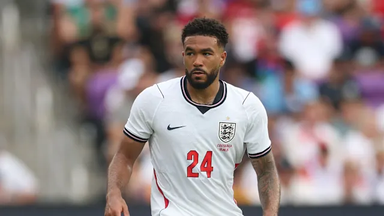


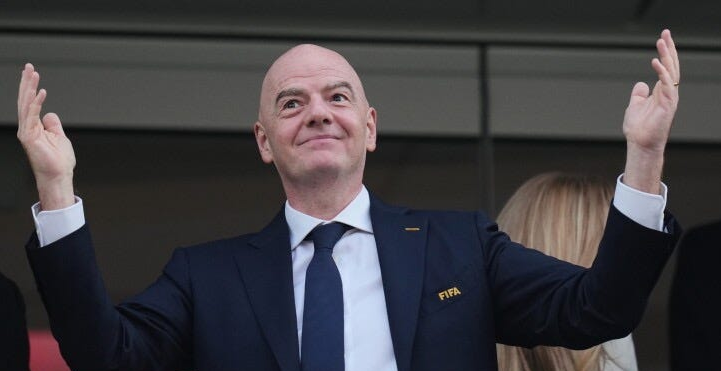
According to four people familiar with the matter, within hours of the conclusion of the United States' match on Wednesday, U.S. President Donald Trump personally called FIFA President Gianni Infantino to request a review of the decision to suspend Folarin Balogun following his red card at the World Cup.
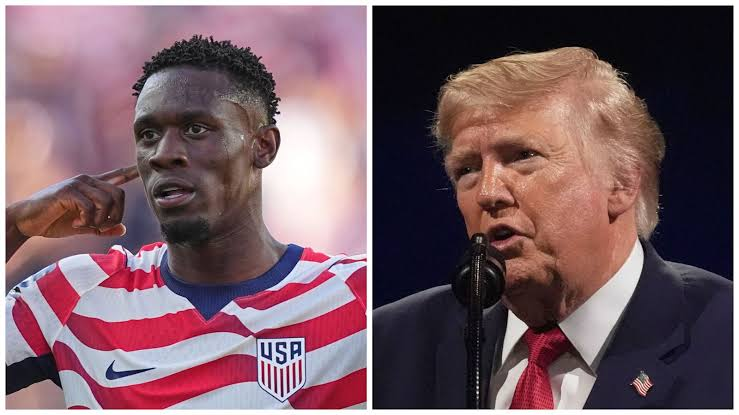
On Sunday, FIFA officially rescinded the suspension, announcing that Balogun will be eligible to play in Monday's away match against Belgium.
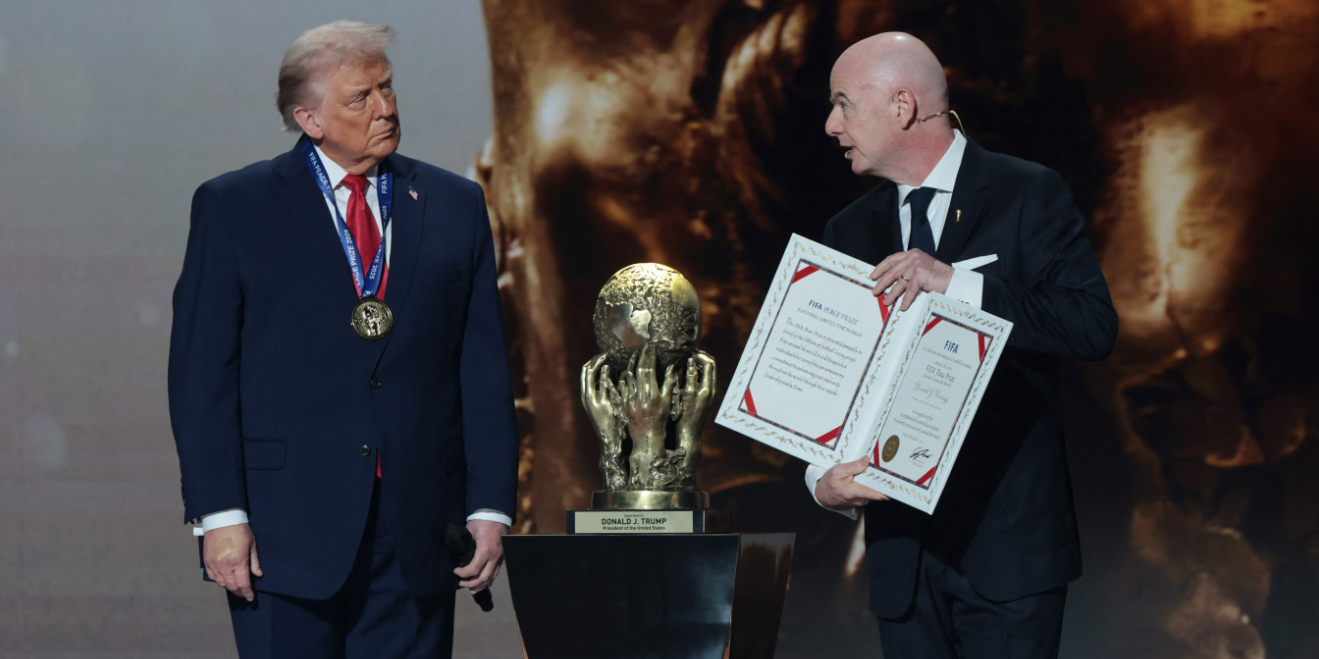
This reversal is extremely rare. It marks the first time since 1962 that FIFA has allowed a player directly sent off with a straight red card in a World Cup match to return immediately for the next game. Infantino has long gone to great lengths to curry favor with Trump. Last year, against the backdrop of Trump's public but ultimately unsuccessful bid for the Nobel Peace Prize, FIFA even specially created and awarded him the “FIFA Peace Prize.”
According to two people familiar with the call, shortly after Balogun received the red card, senior officials in the Trump administration, including Commerce Secretary Howard Lutnick and Andrew Giuliani, the executive director of the White House World Cup Task Force, urgently hired lawyers to assist the U.S. Soccer Federation in seeking an appeal, completely disregarding FIFA statutes that explicitly prohibit such appeals.
The aforementioned sources stated that U.S. Soccer officials argued there was a procedural impropriety in the red card decision, reasoning that referees should not rely on slow-motion video replays to determine specific punishments. However, in reality, VAR has long been a routine operation in modern football, and it is common for players to be sent off due to the intervention of the video assistant referee.
Goodwin, a hedge fund manager and a major donor to U.S. Soccer, provided a lead to White House officials, alleging that the match's head referee, Raphael Claus, was suspected of match-fixing in Brazil due to his frequent issuance of unusual red cards. Although neither Brazilian judicial authorities nor FIFA had previously found any evidence of wrongdoing by Claus, sources confirmed that Trump nonetheless raised these allegations during his phone call with Infantino. Goodwin subsequently forwarded requests for comment on the matter to U.S. Soccer.
It is reported that the head referee, Raphael Claus, did not initially rule a foul by Balogun, but overturned his initial decision following prompts from the video assistant referee team responsible for monitoring the VAR replays. The members of this video referee team were from Venezuela, Colombia, and France, respectively.
Sources revealed that after Balogun's eligibility was restored on Sunday, Infantino spoke with Trump on the phone again, with Trump praising Infantino for making the "right decision." In addition, Trump also called USA coach Mauricio Pochettino to wish him luck in Monday's crucial clash against Belgium. Pochettino told the media at Sunday's pre-match press conference that his team “are not the bad guys.”
FIFA did not immediately respond to requests for comment, but officially confirmed Balogun's eligibility shortly after TA disclosed this massive turnaround earlier that afternoon.
The decision sparked intense outrage in Belgium. In a statement released on Sunday, the Belgian Football Association noted: "We are shocked by FIFA's announcement that suspended U.S. player Folarin Balogun is eligible to play in the USA-Belgium match." The Belgian FA added that it is currently “evaluating all viable legal and response options.”
The White House referred to Trump's post on social media, in which he celebrated FIFA's announcement but made no mention of his call to Infantino, nor did he publicly claim credit.
Trump wrote on Truth Social: “Thank you to FIFA for acting justly and reversing this massive injustice.”
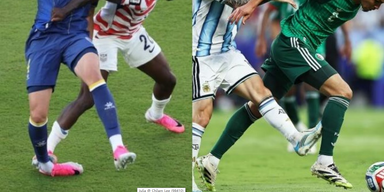
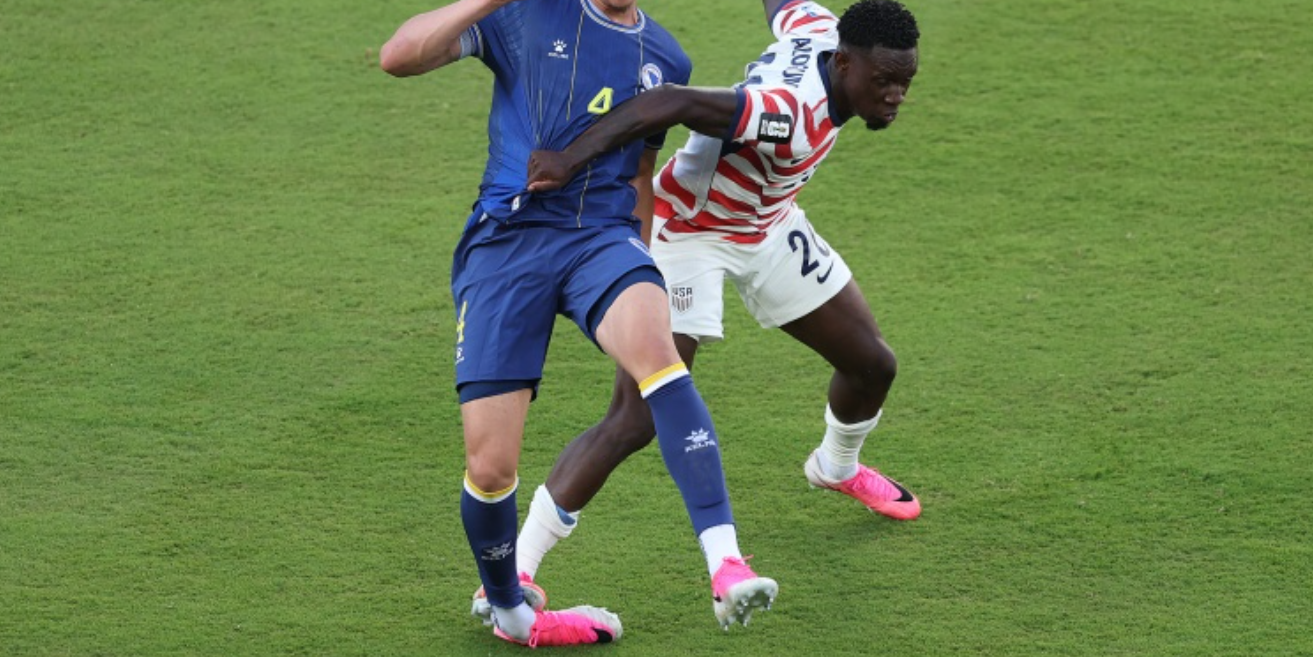
Balogun was sent off with a red card during last Wednesday's match against Bosnia and Herzegovina. Replays showed that while contesting possession, the sole of Balogun's foot stamped directly on his opponent's ankle, causing a severe joint sprain. Following a review by VAR, the head referee brandished a red card to dismiss him. According to disciplinary regulations, the red card automatically carries a one-match suspension, meaning he would miss Monday's do-or-die clash against Belgium.
However, FIFA exceptionally gave him the "green light" on Sunday.
In an official statement, FIFA noted: "In accordance with Article 27 of the FIFA Disciplinary Code, the suspension will be deferred with a probationary period of one year. If Folarin Balogun commits a similar violation in nature and severity within the probationary period, the probation will be revoked, and the original sanction will be served consecutively with the new sanction." However, the official statement failed to explain why Balogun was exempted from the "automatic suspension" that all other dismissed players must serve.
According to an internal memorandum drafted by Trump's brain-trust lawyers for U.S. Soccer and reviewed by The New York Times, the three-page document detailed how to strengthen the American appeal position by searching for potential loopholes in FIFA's red card regulations. The document bluntly stated that FIFA's disciplinary rules are vague enough to leave ample room for legal challenge. The memo even suggested that the appeal could be elevated to the level of "U.S. national sovereign interests" and threatened to take the case to the Court of Arbitration for Sport (CAS), the highest arbitral body in global sports.
In its protest statement, the Belgian FA emphasized that FIFA's move directly violated its own promulgated rules and regulations, completely contradicting both the official briefings at the pre-World Cup preparatory meetings and the official circular sent to national associations in May.
This "frontline pardon" for Balogun undoubtedly refocuses external attention on the extraordinary personal relationship between Infantino and Trump.
In stark contrast to the "special treatment" in this case, the way FIFA treated the Iranian team during the World Cup was heavily criticized by outsiders. Against the backdrop of ongoing geopolitical tensions between the US and Iran, Iranian players were previously restricted to preparing outside the United States (in Mexico) and their stay within the US was strictly limited.
Allowing Balogun to return is undoubtedly a massive boost for the US team. But privately, multiple senior FIFA officials expressed disbelief at this egregious precedent of political interference in sports, openly worrying that this move would trigger a chain reaction—fearing that if any other team's star player is suspended due to a red card in the future, all parties might follow this method to pressure FIFA for special leniency.
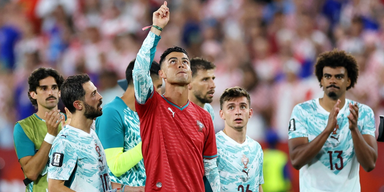
In fact, this is not the first time FIFA has plunged into a PR storm due to flip-flopping decisions and suspected favoritism toward powerhouse teams or superstars. Before the start of this year's World Cup, global icon Cristiano Ronaldo was supposed to miss the first two group matches due to a red card received in a prior tournament, but FIFA ultimately gave him the "green light all the way" to feature in the opening match.
Balogun's dramatic "get-out-of-jail-free card" mirrors a historical cause célèbre from the 1962 World Cup. At the time, Brazil's legendary star Garrincha was sent off in the semi-finals, after which high-ranking government officials, including Brazilian Prime Minister (later President) Tancredo Neves, heavily intervened to jointly pressure FIFA's top brass, ultimately forcing FIFA to make an exception allowing Garrincha to play in that year's World Cup final.