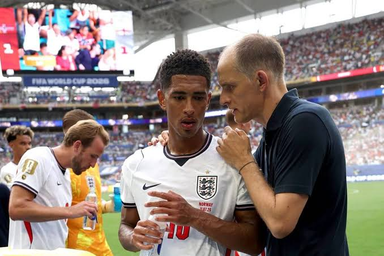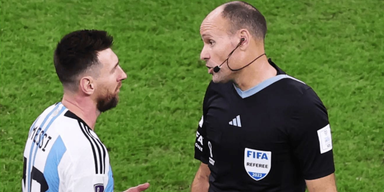


The rivalry between Argentina and England is a classic football antagonism that exists between the Argentina national football team and the England national football team, as well as between their respective sets of fans, and is considered one of the most hostile rivalries in the football world. Matches between these two teams, even friendly ones, are often accompanied by significant and sometimes controversial incidents. This rivalry is characterized by being an intercontinental antagonism; typically, football rivalries of this nature occur between countries that are geographically close to each other, such as France–Italy or Argentina–Brazil. In Argentina, England is viewed as one of the main rivals of the national football team, second only to Brazil, Germany, and Uruguay. In England, the rivalry also holds considerable importance, partly due to non-footballing events, particularly the 1982 Falklands War.
1982 Falklands War:
The Falklands War (Spanish: Guerra de las Malvinas) was an undeclared ten-week war between Argentina and the United Kingdom in 1982 over two British overseas territories in the South Atlantic: the Falkland Islands and its dependencies, South Georgia and the South Sandwich Islands. The conflict began on April 2, 1982, when Argentina invaded and occupied the Falkland Islands, followed by an invasion of South Georgia the next day. On April 5, the British government dispatched a naval task force to engage the Argentine Navy and Air Force, followed by an amphibious landing on the islands. The conflict lasted for 74 days, ultimately ending on June 14 with Argentina's surrender, and the islands were returned to British control. During the war, a total of 649 Argentine military personnel, 255 British military personnel, and 3 Falkland Islanders lost their lives.
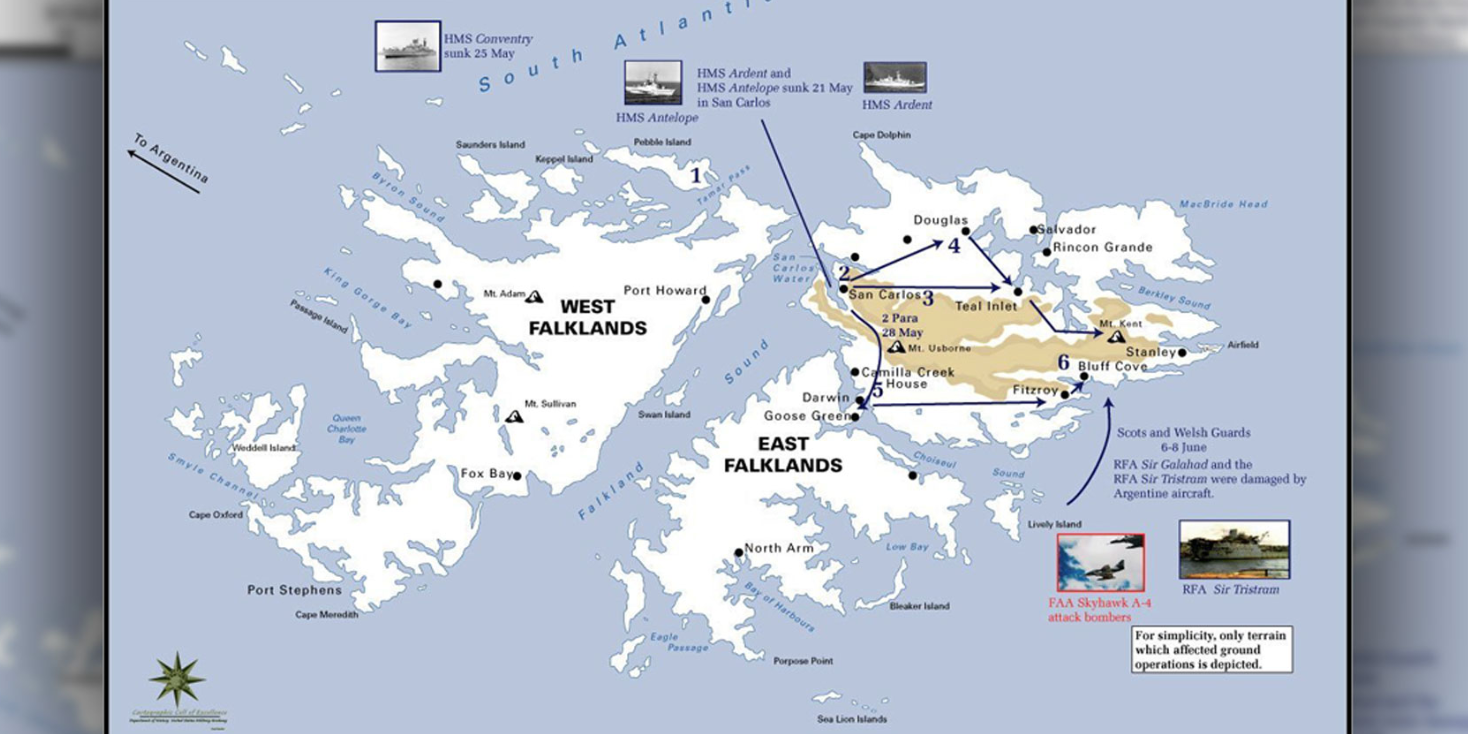
This conflict had deep impacts in both countries and became the subject of numerous books, articles, films, and songs. Patriotic sentiment soared in Argentina, but the unfavorable outcome triggered large-scale protests against the military junta, accelerating its downfall and the country's democratization process. In the United Kingdom, the Conservative government, boosted by the successful outcome, was re-elected with an increased majority the following year. The cultural and political impact of the conflict was smaller in the UK than in Argentina, where it remains a frequent topic of discussion.
1986 World Cup
The official match that initiated the recent disputes between the two teams was at the 1986 World Cup in Mexico, during the quarter-final stage. This encounter was exceptionally intense due to the 1982 Falklands War that had erupted four years prior between the Argentine Republic and the United Kingdom, with many Argentines viewing the match as an opportunity for revenge against England for its role in the conflict.
The Argentine team took the lead through a highly controversial goal by Diego Maradona, who used his hand to strike the ball into the net. Tunisian referee Ali Bin Nasser ruled the goal valid, infuriating the England team and fans. This goal became known as the "Hand of God," a term originating from Maradona's playful description of the goal-scoring process, and achieved notoriety in England, especially after England lost the match and Argentina subsequently won the tournament.
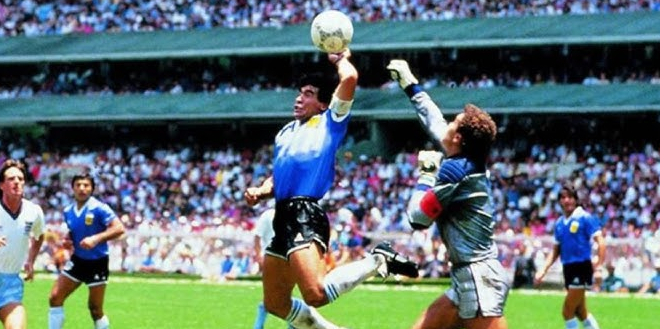
Also in this match, Maradona scored a second goal, which was voted the greatest goal in World Cup history in 2002, before England forward Gary Lineker pulled one back, but England failed to score again, ultimately losing 1-2. Despite the technical brilliance of the second goal, Maradona wrote in his autobiography: "Sometimes I think I preferred the one I scored with my hand... it was a bit like stealing the wallet of the English." He also wrote, regarding the Falklands conflict, “It was as if we had beaten a country, not just a football team... although before the match we said that football had nothing to do with the Falklands War, we knew they had killed a lot of Argentine boys there, like little birds. And this was exactly revenge.”
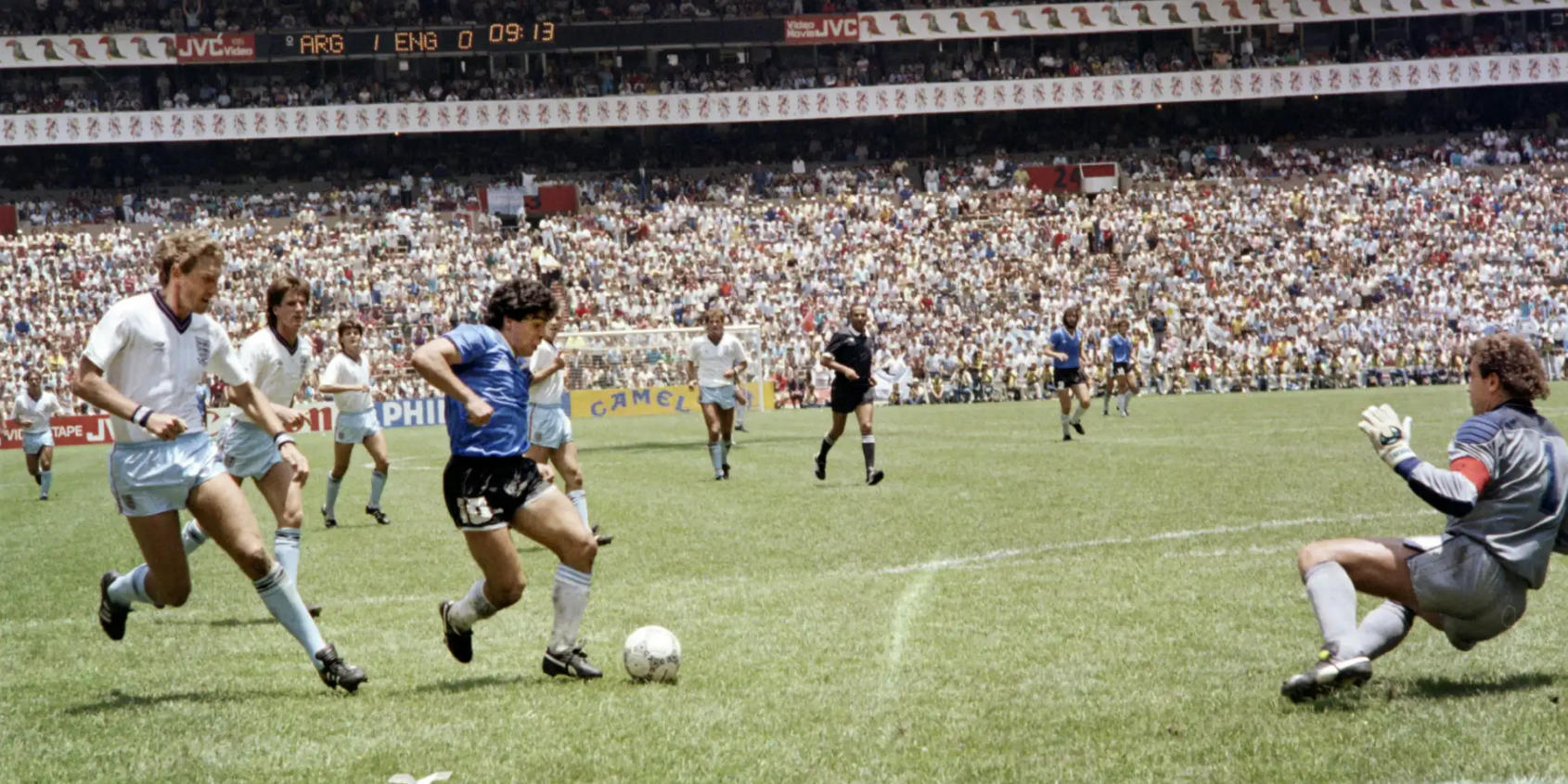
This match greatly intensified the rivalry between the two teams in England, with both sides feeling they had been cheated out of qualification by Maradona's handball. The importance of these two goals to the English people is evident, as they were voted sixth in Channel 4's "100 Greatest Sporting Moments" in 2002. Meanwhile, in Argentina, this match was seen as revenge for the Falklands War, as well as revenge for the unfair match in the 1966 World Cup.
1998 World Cup:
The next encounter between the two countries occurred in the 1998 FIFA World Cup Round of 16, held in Saint-Étienne, France. There were many notable aspects to the match, including a goal considered one of the greatest in England's history, scored by young forward Michael Owen. The match is also remembered for David Beckham being sent off with a red card. Beckham was fouled by Diego Simeone; as Simeone stood up, he rubbed the back of Beckham's head with his knuckles while Beckham lay face down on the pitch. After falling to the ground, Beckham lashed out with his leg at Simeone, who then fell to the ground, prompting the referee to send Beckham off.
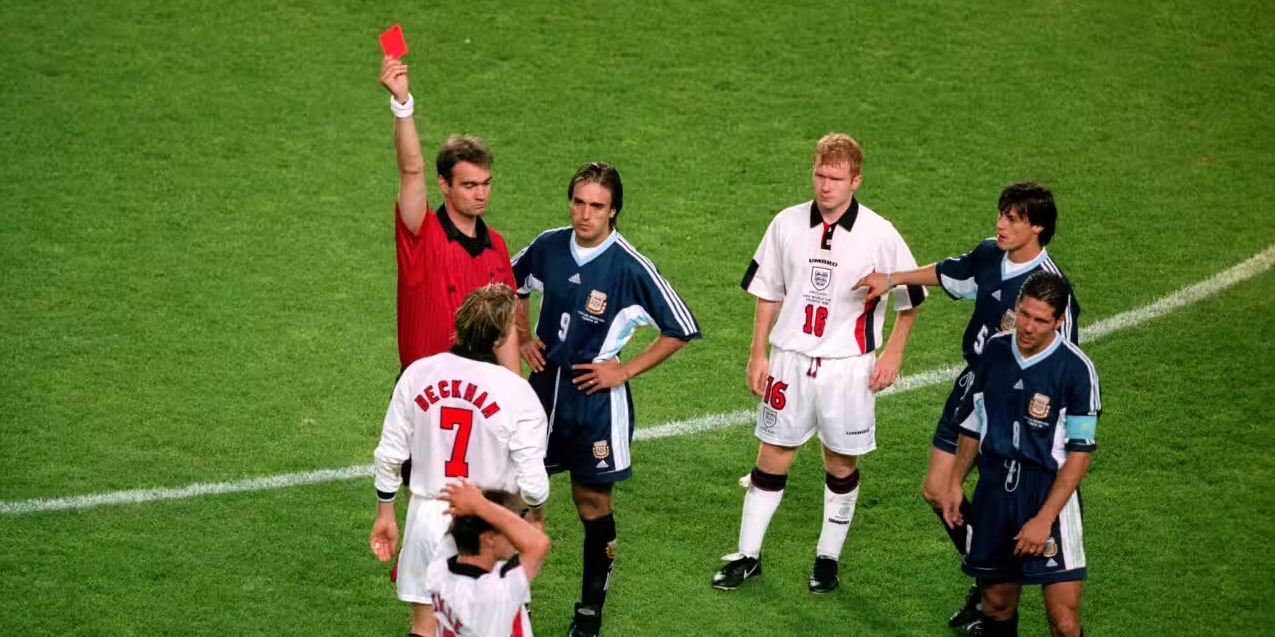
Playing with ten men, England withstood Argentina's attacks, and as the match neared its conclusion, Sol Campbell headed the ball into the net amidst a scramble in the Argentine penalty box. As the England players began to celebrate the winning goal, the referee blew for a foul, ruling that Alan Shearer had fouled the Argentine goalkeeper prior to the goal, rendering it invalid. The ensuing free-kick was taken quickly while the England players were still celebrating, forcing them to track back rapidly to prevent Argentina from scoring. By the end of extra time, the score remained a 2-2 draw. In the subsequent penalty shootout, Argentina won 4-3, with two of England's spot-kicks saved by goalkeeper Carlos Roa.

Following the match, Beckham was lambasted by the British media for his petulance and naivety on the international stage; the next day's Daily Mirror headline described the England team as: "10 Heroic Lions, One Stupid Boy". Simeone later made a "confession," admitting that he deliberately faked injury to get Beckham sent off, and that all his teammates urged the referee to give Beckham a red card.
2002 World Cup
The two teams were drawn to meet again in the group stage of the 2002 World Cup. Having been eliminated by Argentina in two of the previous three World Cups, tensions within England were exceptionally high. This tension was escalated by England only managing a draw in their opening match against Sweden, meaning they needed a good result against Argentina to avoid elimination. England captain David Beckham scored the only goal of the match, a penalty resulting from Mauricio Pochettino's foul on Michael Owen, which many in the English sporting world viewed as redemption for Beckham's dismissal four years earlier.
As The Times described it in their match report, "vilified for the red card that helped to usher England out of the 1998 World Cup at the hands of Argentina, he wakes this morning with his halo brighter than ever."Although the Argentine players and public criticised the awarding of the penalty kick, the game was generally played in a good, if highly competitive, spirit, and there was none of the bitterness that had affected the 1986 and 1998 meetings.
2026 World Cup:
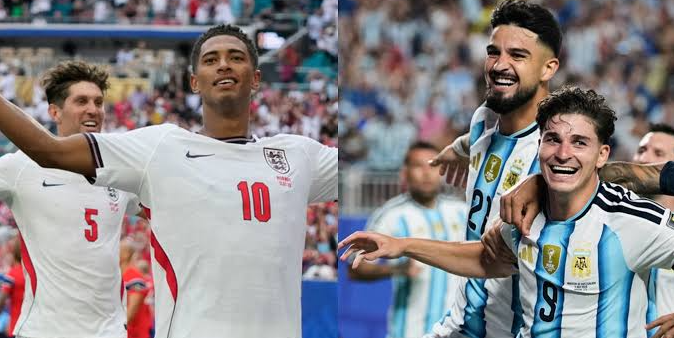
Twenty-four years later, the two sides meet once again on the World Cup stage. The difference now is that within these twenty-four years, Argentina has reached the final twice and lifted the trophy once, whereas England only regained competitiveness in the World Cup after the 2014 tournament under the management of Gareth Southgate and Thomas Tuchel. This classic matchup is bound to become one of the most highly competitive and compelling spectacles of this year's World Cup.