


Dale Johnson, renowned reporter from BBC Sport, has shared updates on the new trial regulation for the Premier League.
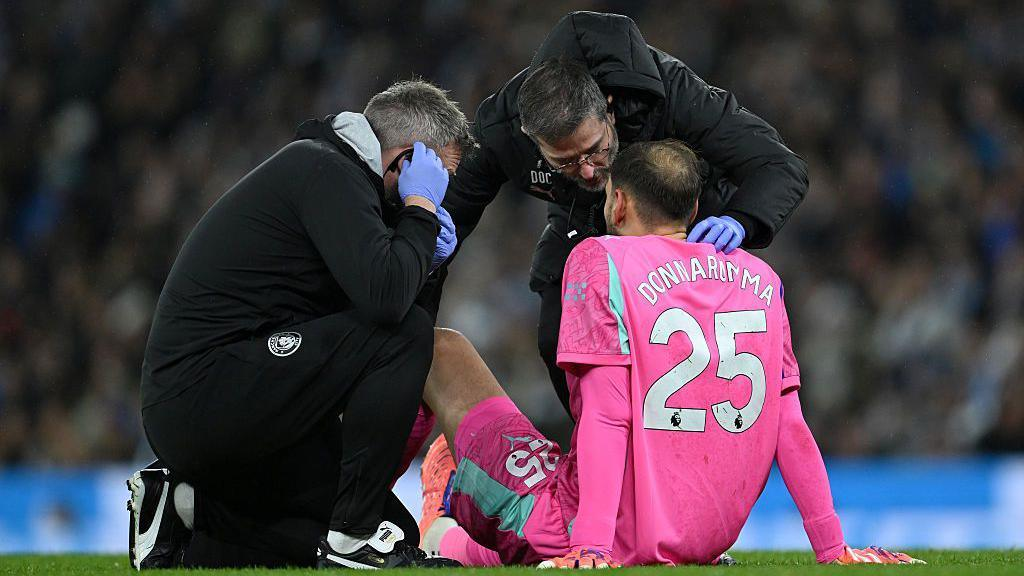
English football will roll out a trial rule this season designed to stamp out the practice of using goalkeeper treatment breaks as unofficial tactical timeouts.
The Football Association, Premier League, English Football League, National League and Women’s Super League have reached an agreement over the measure, which now awaits approval from the International Football Association Board (IFAB).
Earlier this year, IFAB decided against amending the official Laws of the Game, instead inviting national leagues to run voluntary trials.
Professional refereeing body Pro Ref, led by chief refereeing officer Howard Webb, has held discussions with leagues to find a solution, finally settling on the measure requiring one outfield player to temporarily leave the pitch.
When the referee signals for the physio to enter the pitch to treat the goalkeeper, the coach will be given 10 seconds to nominate another player to leave the field for one minute and inform the fourth official of their selection.
If no player is named within the 10-second window, the team captain must leave the pitch.
Should IFAB grant timely approval, the first fixture to adopt this trial rule will be the Carabao Cup preliminary round match between Tranmere Rovers and Rochdale on Saturday 1 August.
In recent years, the tactic of exploiting goalkeeper treatment stoppages for tactical timeouts has grown increasingly common and sparked widespread controversy.
It is not unusual to see a goalkeeper sit on the turf and signal for medical staff, while outfield players head to the technical area to receive tactical instructions. Once the coach has finished delivering instructions, the goalkeeper gets back to his feet and play resumes.
In addition, teams can use these goalkeeper treatment intervals to disrupt opponents’ attacking momentum when they are on top.
Last November, Leeds United manager Daniel Farke accused Manchester City goalkeeper Gianluigi Donnarumma of feigning injury to “bend the rules” and break the rhythm of the match.
The measure is intended to act as a proactive deterrent.
At the IFAB Annual General Meeting held in February, refereeing chief Pierluigi Collina stated that finding a solution to the issue of goalkeeper tactical timeouts had become a top priority. During the 2026 FIFA World Cup, Collina instructed match officials to prevent players from moving to the technical area during stoppages.
The effectiveness of the new trial remains open to debate, as the three-minute cooling breaks scheduled in each half already create natural opportunities for teams to exchange tactical information.
Internal discussions within English football concluded that simply banning players from approaching the touchline would not stop coaches from exploiting goalkeeper injuries to slow match tempo.
English football opted for this pilot framework based on existing logic applied to outfield players: if a physio comes onto the pitch to treat an outfield player, that player must leave the field for one minute.
The rule aims to prevent abuse in advance and serve as a deterrent, rather than only responding after tactical team talks have already taken place.
Referees will not stop players walking to the touchline during injury treatment, but officials hope the prospect of playing with ten men for one minute will provide sufficient discouragement.
This dynamic carries extra weight in the closing stages of matches. Teams looking to defend a lead often waste time and disrupt opposition attacks via goalkeeper stoppages; under the new trial rule, such sides will face the prospect of playing a man short.
The following scenarios qualify for exemption, meaning no teammate needs to leave the pitch:
The goalkeeper signals that they do not require physio treatment and the game is not halted;
A collision occurs between the goalkeeper and an outfield player;The goalkeeper is fouled and requires immediate treatment;
The goalkeeper sustains a bleeding injury;
A serious injury requiring a substitution or a concussion occurs.
Some observers have raised concerns that the mandatory one-minute off-pitch rule may encourage players – both goalkeepers and outfield athletes – to continue playing while carrying injuries.
The International Football Association Board (IFAB) will evaluate the results of the trial at meetings held throughout the season. A successful trial could lead to a permanent global rule change taking effect starting from the 2027-28 season.